I have only implemented this photo editing idea in Meitu Xiuxiu
After using countless photo editing software, I still open MeituXiuXiu the most frequently.
Not because it is the most professional, but because it understands me.
Other software are more inclined to the thinking of photographers, but Meitu XiuXiu really starts from the perspective of “ordinary users”, solving every small problem of “the photos are not good enough but I want to post them”, and even allowed me to gradually form my own “photo editing ideas” – a creative process that can only be successfully completed in Meitu XiuXiu.
Today, I will share this photo editing logic, maybe it can help you find your own style path.
Start choosing filters based on the “visual style” instead of brightening
Many people start by “adding brightness and adjusting contrast” when retouching photos, but I recommend starting with the visual style. When I open Meitu XiuXiu(美图秀秀), the first thing I do is always to choose a filter, and I don’t just apply popular filters, but think about which style is suitable for this photo:
- Fresh and natural → Creamy style, oxygen filter (such as Bubble, Fresh)
- Dark atmosphere → Hong Kong style, film filter (such as Vintage, HK)
- Artistic soft light → low saturation filter (such as Film, Sketch)
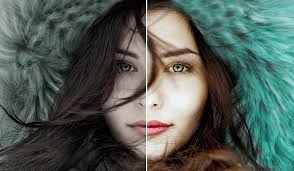
The filter strength is usually adjusted to 30%-60% , maintaining the light and color of the original image while giving the photo a “sense of style” rather than a “template sense.”
This “starting from style” approach allows each of my pictures to be consistent, rather than just randomly piling up special effects.
Secondary composition is not cropping but resetting the visual center of gravity
The “cropping” function of Meitu XiuXiu(美图秀秀下载) is not only used to remove corners, but also an important step in adjusting the visual focus.
Many photos are not taken badly, but the focus is not clear. For example:
- If the background of the portrait is too busy, you may want to crop it into a mid-shot or close-up.
- When taking pictures of buildings, if the picture is too empty, you can crop it into a square or vertical picture and move the subject to the center.
I often use the “thirds composition line” and “golden ratio line” to help determine the focus of the picture, and at the same time use the “white space composition” technique to make the picture look more concise and professional.
Although other apps also have cropping functions, I found that only Meitu XiuXiu’s composition line assistance and operational flexibility are most in line with my adjustment habits.
Use “local adjustment” to create light and shadow levels
The layering of a photo often depends on the distribution of light and shadow.
I often use the local adjustment function in Meitu XiuXiu to enhance light and shadow, especially in the following situations:
- The face is dark but the background is bright → Use partial brightening to create a focusing effect;
- Sky exposure → Local brightness reduction + increase blue saturation;
- The light and shadow are not three-dimensional enough → Increase the local contrast to simulate the effect of natural light hitting the object.
This idea of photo editing, which is similar to “turning on the light”, is something I have repeatedly tried out in Meitu XiuXiu. Other photo editing apps are either too complicated or not intuitive to achieve this effect.
Layers and doodles create unique content expressions
Meitu XiuXiu’s “Doodle Pen + Layer Sticker” is the tool combination I most often use to express emotions or creativity.
for example:
- Draw handwritten lines on the edge of the photo to make it look more handmade.
- Add irregular borders or overlay decorative stickers to create a retro collage style;
- Use a light gray brush to add text graffiti to make the picture more like the inside pages of a magazine.
The key point is not “what to paste”, but how to use layers to achieve the superposition effect. Meitu Xiuxiu supports the movement, transparency adjustment and order arrangement of layers, which is very friendly for people like me who like to DIY graphic layout.
The final color adjustment is to “de-standardize” the style
For many people, the last step after retouching the photo is to “save” it, but I will do one thing: “reverse filter” processing.
What does that mean? I will go back to the adjustment interface and adjust the details of some places where the preset filter is too obvious, such as:
- The filter makes the skin color reddish → locally reduce the red saturation;
- The contrast of the whole image is too strong → reduce the clarity to create a “soft focus” texture;
- Background is too eye-catching → Reduce the saturation or brightness of the background area.
This step is actually to “remove the traces of standard filters” so that the photos look like they are presented naturally, rather than “a template style that anyone can copy.”
This is the photo editing logic that I have only implemented in Meitu XiuXiu: first unify the style, then make adjustments to the details, and finally remove artificial traces .
Flexible and easy to use
Meitu is not just a photo editing tool for me, but more like a “thinking container” that allows me to freely explore style and expression. Its functions may not be the most professional, but it is flexible and easy to use, and can support me to complete the entire process from aesthetic appreciation to creative expression.
So whenever someone asks me “What did you use to edit your photos? They look so natural and textured”, I always smile and say:
I have only implemented this photo editing idea in Meitu XiuXiu.
ALSO READ: What Is a BizOp? Easy Guide to Business Opportunities in 2025